
In 2002 West Brom legend Jeff Astle sadly passed away in his daughters’ home at the age of 59, the cause of death was later ruled to be the neurodegenerative disease CTE. As this is disease is often associated with boxers it had come as a shock to the family, but the coroner stated that Jeff Astle had developed CTE from something he was renowned for, heading footballs. His death marked the first time that a British footballer had been confirmed to have died as a result of heading a ball.
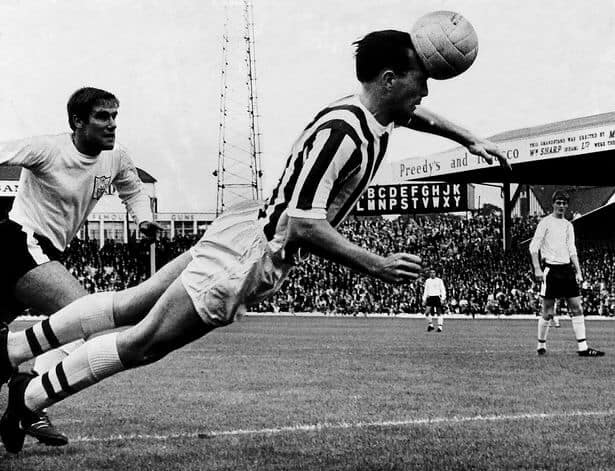
Last year a vital study published by the Glasgow Brain Injury Research Group confirmed the risks that players faced, it found that you are 3.5 times more likely to develop a neurodegenerative disease if you are a footballer, with a five-fold increase for Alzheimer’s, a four-fold increase in Motor Neurone Disease and a two-fold increase in Parkinson’s. The man leading the study Dr Willie Stewart stated, “I think we can say now that head injuries and head impacts are something that would be top of the list for research pursuit and top of the list for a change in football.”
Given how football is our national game, with children starting in the game as young as 5 years old, this is an issue that should have been looked at and considered much earlier. Unfortunately, it has taken the recent death of Nobby Stiles and diagnosis of Bobby Charlton off the back of other members of the 1966 World Cup winning team developing dementia for the FA to finally take action. The first step has been taken by the FA, as of February 2020 children under 12 have been banned from heading the ball in training but are allowed to in matches. It may not seem like a lot, but it is that repetitive practice of heading the ball in training which is likely where most the damage is being done. Many people are still of the belief that risks were only posed to players when the old leather balls were still in use. This is not the case though however, as despite the balls now being considerably lighter, they move at a faster speed, which may pose an equal risk. The young players coming through need to be protected from as early as possible, but what can we do for players currently playing the game?
Dawn Astle and her family have been at the forefront of campaigning for more research to be done ever since her father’s death. With the backing of families of more than 400 players and medical experts, they want action taken now and are calling for:
- New concussion protocols to bring football in line with other sports and allow temporary substitutes
- Care funds and practical help to be made immediately available for the hundreds of families of suffering players;
- A government inquiry into why past warnings about football and dementia were not acted upon more swiftly;
Dawn has now been invited by the FA to be part of a research-led taskforce to advise them on directions for future research. I have to credit the FA here as she is one of the most knowledgeable campaigners on this matter, this should help the FA begin to right some wrongs.
I wanted to see what other studies are being conducted and this is where I learnt about the Scores Project, an independent research study designed to better understand the cognitive health of athletes as they age, with a focus on former professional footballers. The project has been recruiting former sportsmen and women over the age of 40 to take part in the study, one of the benefits of the study is that their cognitive tests can be completed from a tablet at home. Scores Project is headed by Dr Michael Grey, a reader in Rehabilitation Neuroscience and the University of East Anglia, when I reached out to Dr Grey, he had gladly put me through to one of the researchers on the project, Ellen Boucher, who informed me in more detail about the fantastic work being done at Scores, as well as shining some light into recent revelations that women players may be more at risk, you can watch our whole interview below.
In addition to hearing from one of the researchers I wanted to speak to one of the volunteers on the project as well. I spoke to former Norwich City midfielder Jeremy Goss, who revealed his reasons for his involvement, what the tests include and his personal views on the risk’s players face. Jeremy is incredible passionate about his involvement and provided some fascinating insights, you can find the video below.
This is a personal topic for myself, my grandfather played football at a high level and into his 50s and unfortunately developed Alzheimer’s in the later years of his life. Having seen the emotional strain it can have on the family watching your loved one go through that, I hope more research can be backed, to prevent others from going through the same. Since conducting research on this topic I cannot help but feel like there may have also been a link in his case too, but we will never truly know. What we do know however, is that measures can still be put in place to assure that players are not at risk whilst playing the sport they love. They provide us as fans with lifetime memories, we should assure they are lifetime memories for them too.
 report_ant